Is RTS (Radio Télévision Suisse) Politically Biased? Ownership, Funding, and Editorial Policy
RTS (Radio Télévision Suisse) Overview and Political Bias
RTS is often characterized as providing balanced coverage, though critics from right-wing circles frequently allege a left-liberal bias in social and environmental reporting. Some observers suggest it maintains an establishment-friendly perspective. Supporters argue its mandate ensures diverse viewpoints, while detractors claim it reflects urban sensibilities over rural ones.
| Standpoint | Assessment |
|---|---|
| Overall political leaning | Center |
| Estimated number of readers | 2,000,000 |
| Israel support | Neutral / Balanced |
| Use of loaded / emotional language | Low |
| Target Audience | Mass market |
RTS (Radio Télévision Suisse) History
RTS was established in 2010 through the merger of Radio Suisse Romande and Télévision Suisse Romande. Both entities had deep roots dating back to the 1920s and 1950s, respectively. It serves as the primary French-language public broadcaster in Switzerland, centralizing television, radio, and digital operations in Geneva and Lausanne.
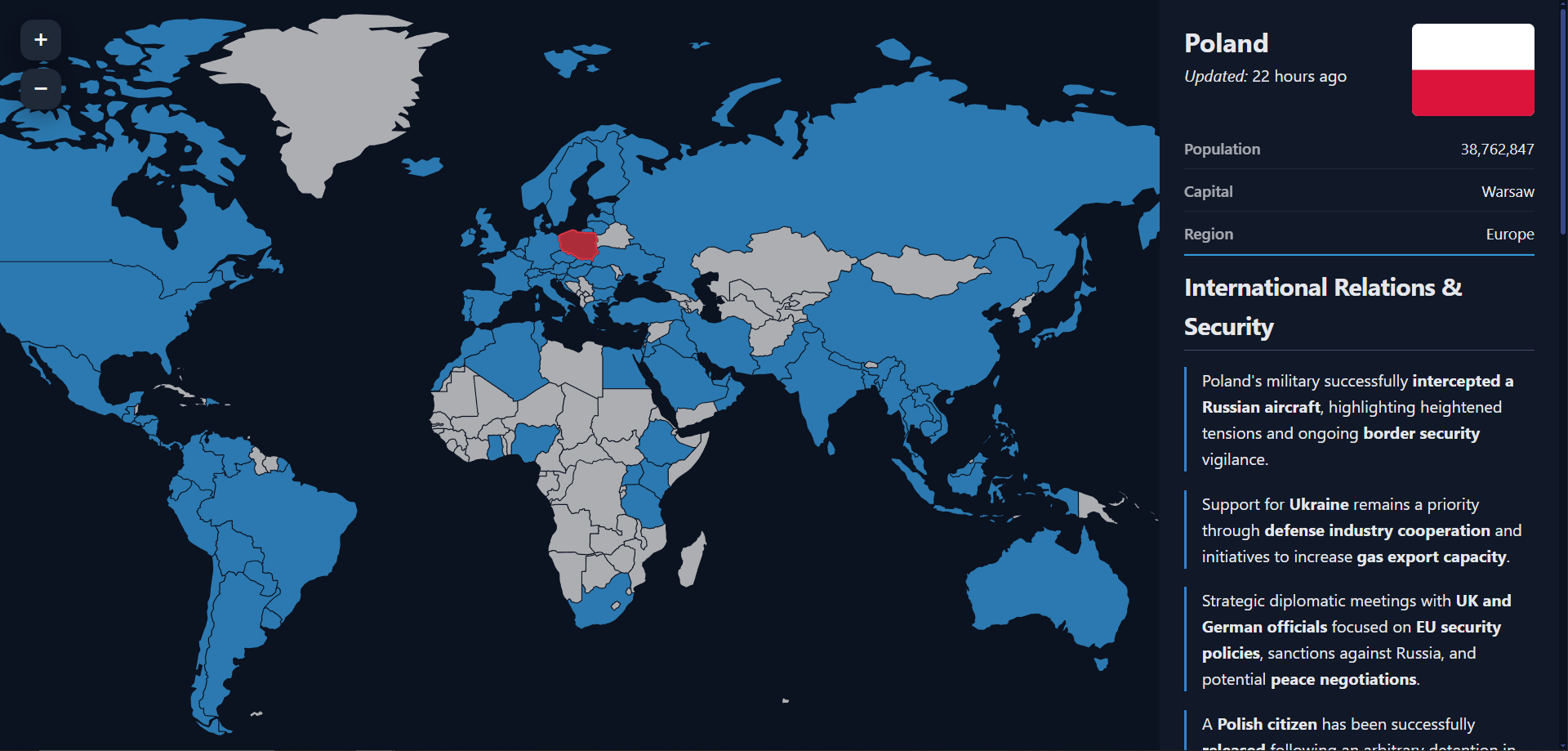
World News Map
Who owns RTS (Radio Télévision Suisse)?
RTS is a department of the Swiss Broadcasting Corporation (SRG SSR), an association under private law with a public service mandate. It is primarily funded by a mandatory household license fee, supplemented by limited commercial advertising and sponsorship. This structure is intended to ensure editorial independence from direct state control.