Is Telenoche Fake News or Legit? Bias, Accuracy, and Source Transparency
Telenoche Overview and Political Bias
Telenoche is often described by critics as maintaining a center-right editorial stance. Observers frequently allege a bias against Kirchnerist administrations, suggesting the program aligns with the corporate interests of its parent company. While supporters view it as a pillar of investigative journalism, detractors argue it employs strategic framing in political reporting.
| Standpoint | Assessment |
|---|---|
| Overall political leaning | Center |
| Estimated number of readers | 1,500,000 |
| Israel support | Mainstream Western / Generally supportive |
| Use of loaded / emotional language | Medium |
| Target Audience | Mass market |
Telenoche History
Debuting in 1966 on Canal 13, Telenoche is one of Argentina’s most iconic news programs. It gained prestige under long-time anchors Mónica Cahen D'Anvers and César Mascetti. Over decades, it evolved from a traditional news format into a more dynamic, investigative, and multi-platform broadcast, maintaining high viewership rankings.
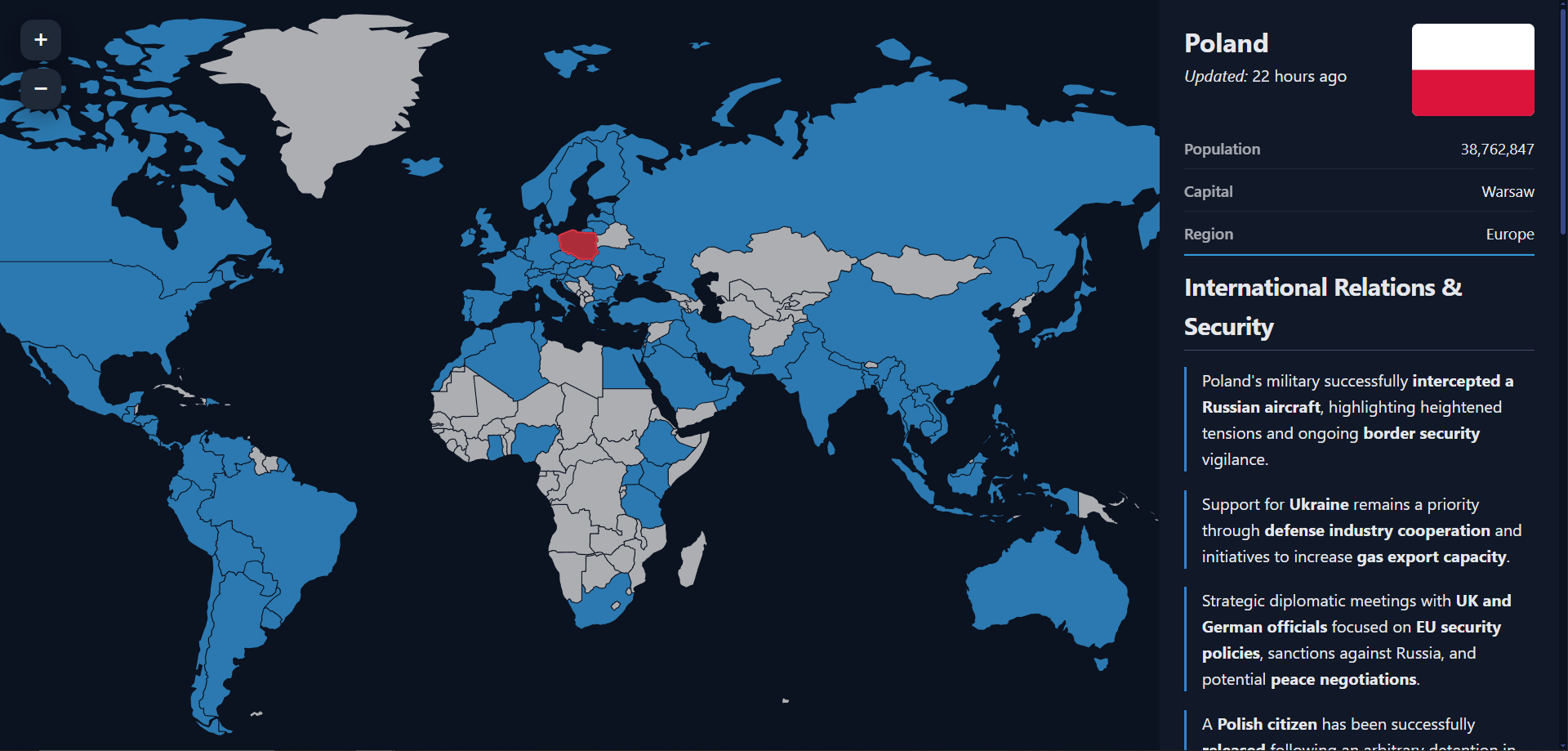
World News Map
Who owns Telenoche?
Telenoche is owned by Artear (Arte Radiotelevisivo Argentino), which is a subsidiary of Grupo Clarín, Argentina's largest media conglomerate. Funding is primarily derived from private advertising revenue. The group’s diverse holdings in cable, internet, and print provide a robust financial foundation for the program's high-production broadcasts.