What Is Business Day's Bias? Political Leaning, Credibility, and Trust Score
Business Day Overview and Political Bias
Business Day is often described as maintaining a pro-market, neoliberal bias, frequently prioritizing fiscal discipline and corporate interests. Critics suggest it tends to favor business-friendly policies over labor-centric perspectives. Its reporting is generally seen as reflecting the views of South Africa’s economic elite while scrutinizing government fiscal management and corruption.
| Standpoint | Assessment |
|---|---|
| Overall political leaning | Center Right |
| Estimated number of readers | 1,500,000 |
| Israel support | Neutral / Western-leaning |
| Use of loaded / emotional language | Low |
| Target Audience | Elite / Professional |
Business Day History
Established in 1985, Business Day was launched following the closure of the Rand Daily Mail. It quickly became South Africa’s leading daily financial newspaper. Over decades, it has documented the country’s economic transition, focusing on market trends, political economy, and corporate governance throughout the post-apartheid era and beyond.
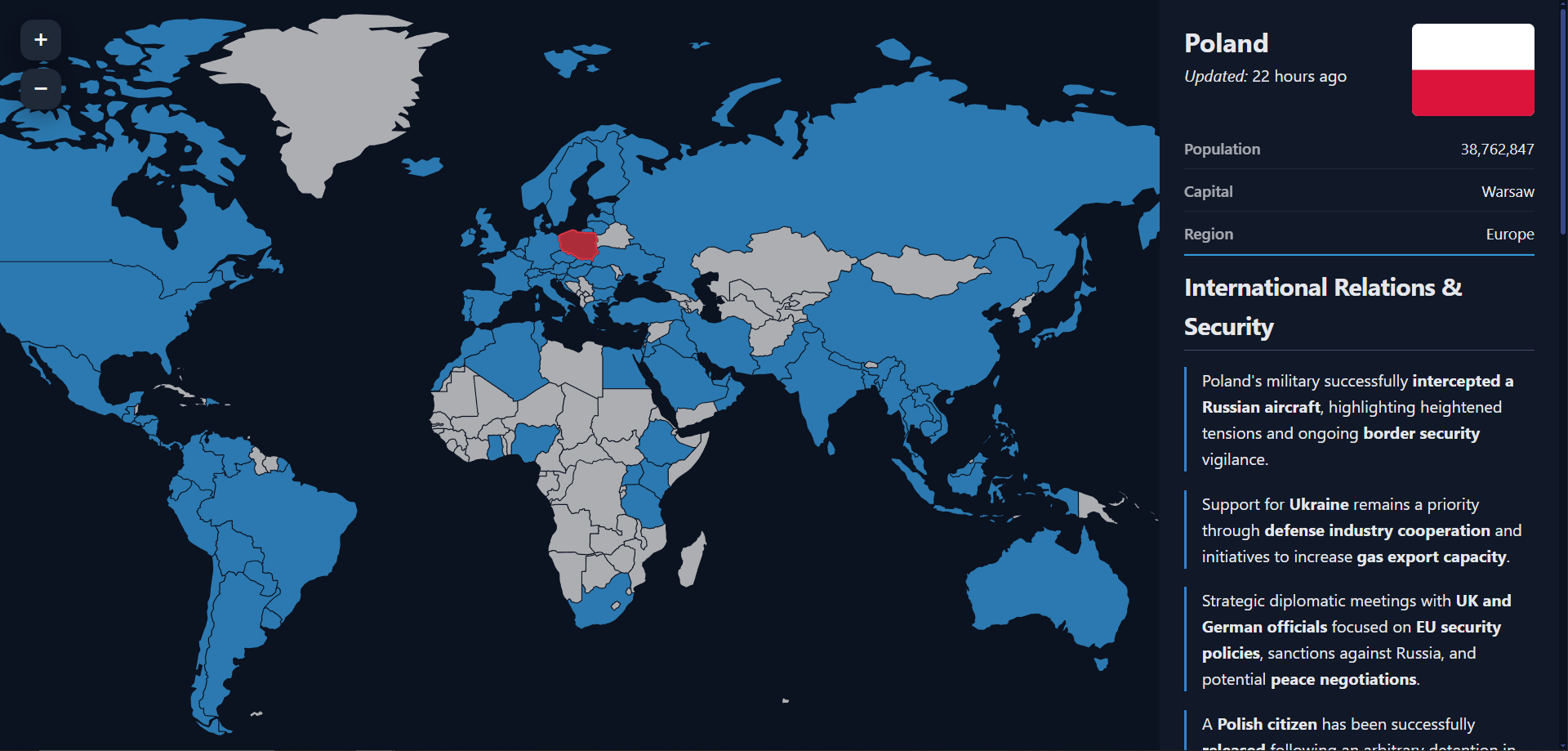
World News Map
Who owns Business Day?
Business Day is owned by Arena Holdings, a prominent South African media company. Historically, it was part of BDFM Publishers, a joint venture between the UK’s Pearson and local interests. Arena Holdings, which acquired the asset from Tiso Blackstar, funds the publication through advertising, subscriptions, and corporate events.