Is Delfi Fake News or Legit? Bias, Accuracy, and Source Transparency
Delfi Overview and Political Bias
Analysts often describe Delfi as a mainstream platform reflecting pro-Western, pro-EU, and pro-NATO sentiments common in the Baltic region. Critics frequently point to its use of sensationalized, clickbait-style headlines to drive traffic. Some observers have also noted that its historically unmoderated comment sections have occasionally hosted divisive nationalistic rhetoric.
| Standpoint | Assessment |
|---|---|
| Overall political leaning | Center |
| Estimated number of readers | 4,000,000 |
| Israel support | Mainstream/Supportive of Israel (aligns with Baltic state foreign policy) |
| Use of loaded / emotional language | Medium |
| Target Audience | Mass market |
Delfi History
Established in 1999 as a pioneering internet portal, Delfi initially launched in Estonia and Latvia before expanding into Lithuania. It survived the dot-com bubble to become the dominant digital news source in the Baltics. Over two decades, it has evolved from an aggregator into a comprehensive multimedia news organization.
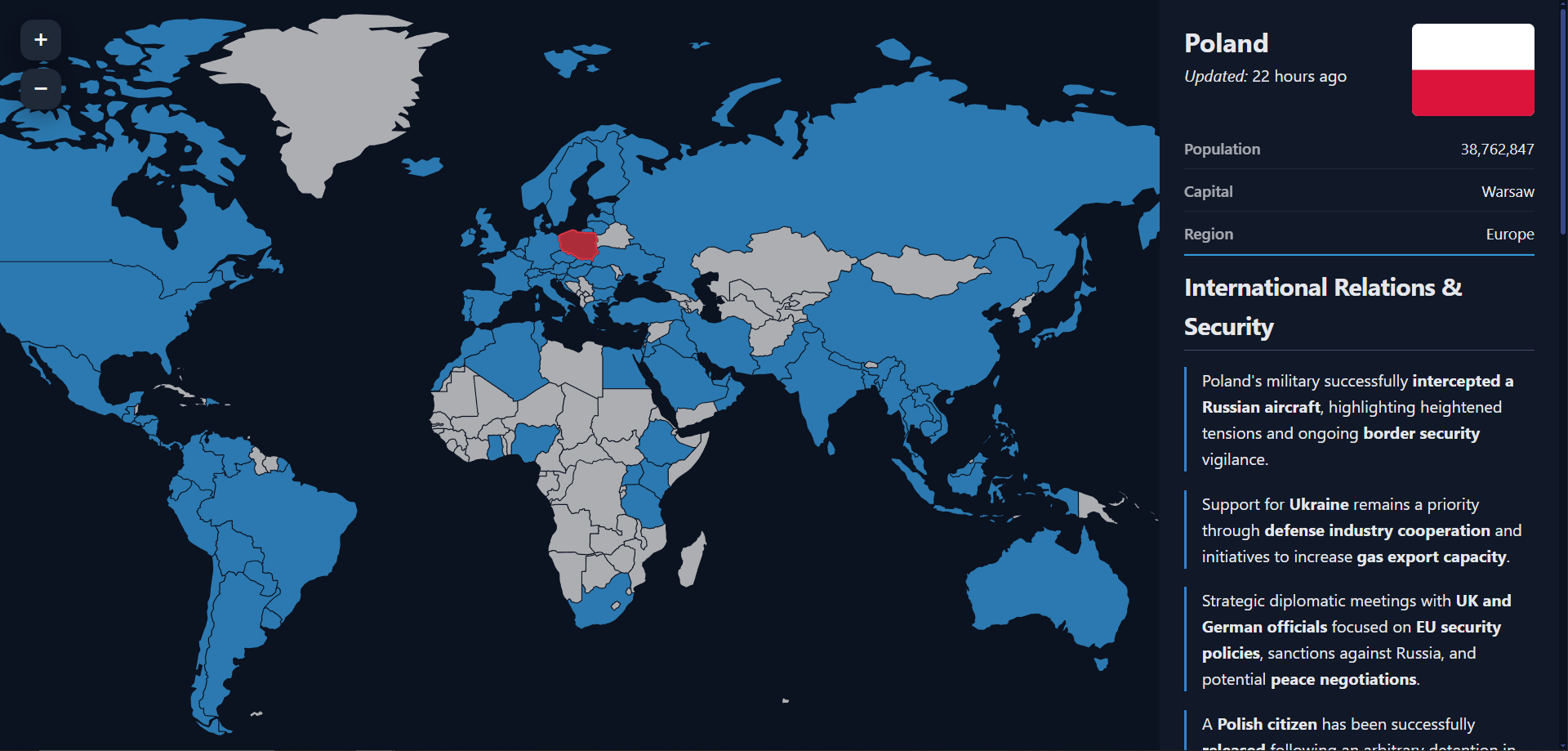
World News Map
Who owns Delfi?
Delfi is owned by AS Ekspress Grupp, the leading media group in the Baltic states, which is publicly traded on the Nasdaq Tallinn Stock Exchange. The majority shareholder is Estonian media mogul Hans H. Luik. The portal is funded through digital advertising and a growing base of paid subscriptions.