Is El País Neutral? Political Bias Rating and Credibility Report
El País Overview and Political Bias
El País is frequently characterized by observers as a center-left, progressive outlet with historical ties to the Spanish Socialist Workers' Party (PSOE). Critics often suggest the publication maintains a pro-EU, institutionalist bias, while some conservative commentators argue its framing of social issues and regional politics reflects a partisan secularist agenda.
| Standpoint | Assessment |
|---|---|
| Overall political leaning | Center Left |
| Estimated number of readers | 85,000,000 |
| Israel support | Generally critical of Israeli government policy; often described as leaning Pro-Palestine |
| Use of loaded / emotional language | Medium |
| Target Audience | Elite / Mass market |
El País History
Founded in 1976 during Spain's transition to democracy, El País emerged as a symbol of the post-Franco era's modernization. It was established by José Ortega Spottorno and became Spain's first major pro-democratic newspaper. Over decades, it expanded into a global brand with a significant presence across Latin America and the United States.
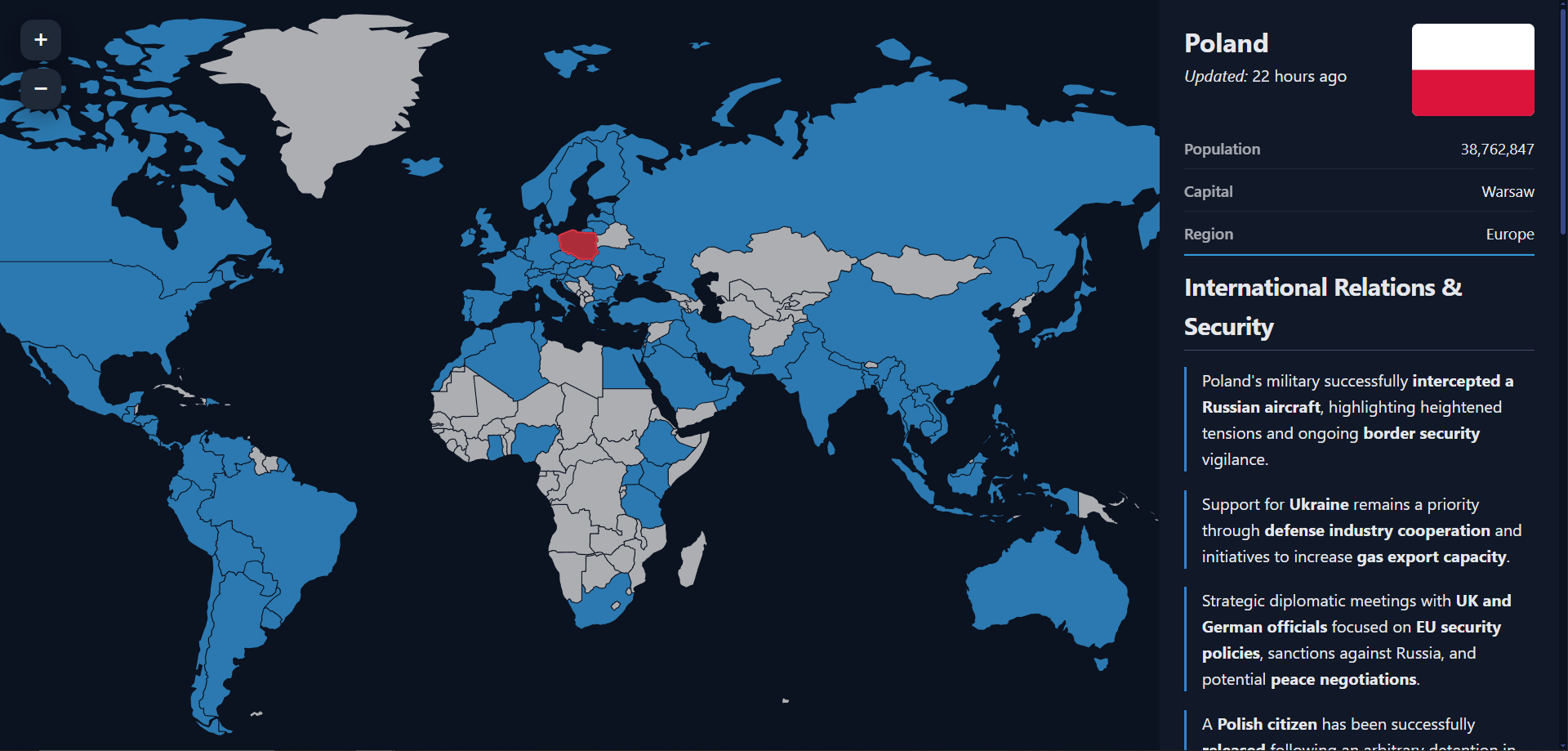
World News Map
Who owns El País?
The newspaper is the flagship property of Grupo PRISA, a prominent Spanish media conglomerate. Major shareholders include the activist fund Amber Capital, French media group Vivendi, and various Spanish financial institutions. Its funding increasingly relies on a digital subscription model, alongside traditional advertising and print circulation across its international editions.