Is Tagesschau Objective? Media Bias, Political Leaning, and Reliability
Tagesschau Overview and Political Bias
Tagesschau is often criticized by some for a perceived pro-government bias and centrist framing. Critics argue it sometimes prioritizes state narratives, while others claim it can be elitist. Conversely, proponents describe it as a benchmark for objective, fact-based journalism that adheres to strict neutrality and high editorial standards.
| Standpoint | Assessment |
|---|---|
| Overall political leaning | Center |
| Estimated number of readers | 10,000,000 |
| Israel support | Generally reflects official German policy supporting Israel's security while reporting on humanitarian developments. |
| Use of loaded / emotional language | Low |
| Target Audience | Mass market |
Tagesschau History
Established in 1952, Tagesschau is Germany's oldest and most-watched television news program. Produced by Norddeutscher Rundfunk (NDR) for the ARD network, it transitioned from a traditional 15-minute evening broadcast into a multi-platform digital news leader, maintaining its position as a central pillar of German public media for decades.
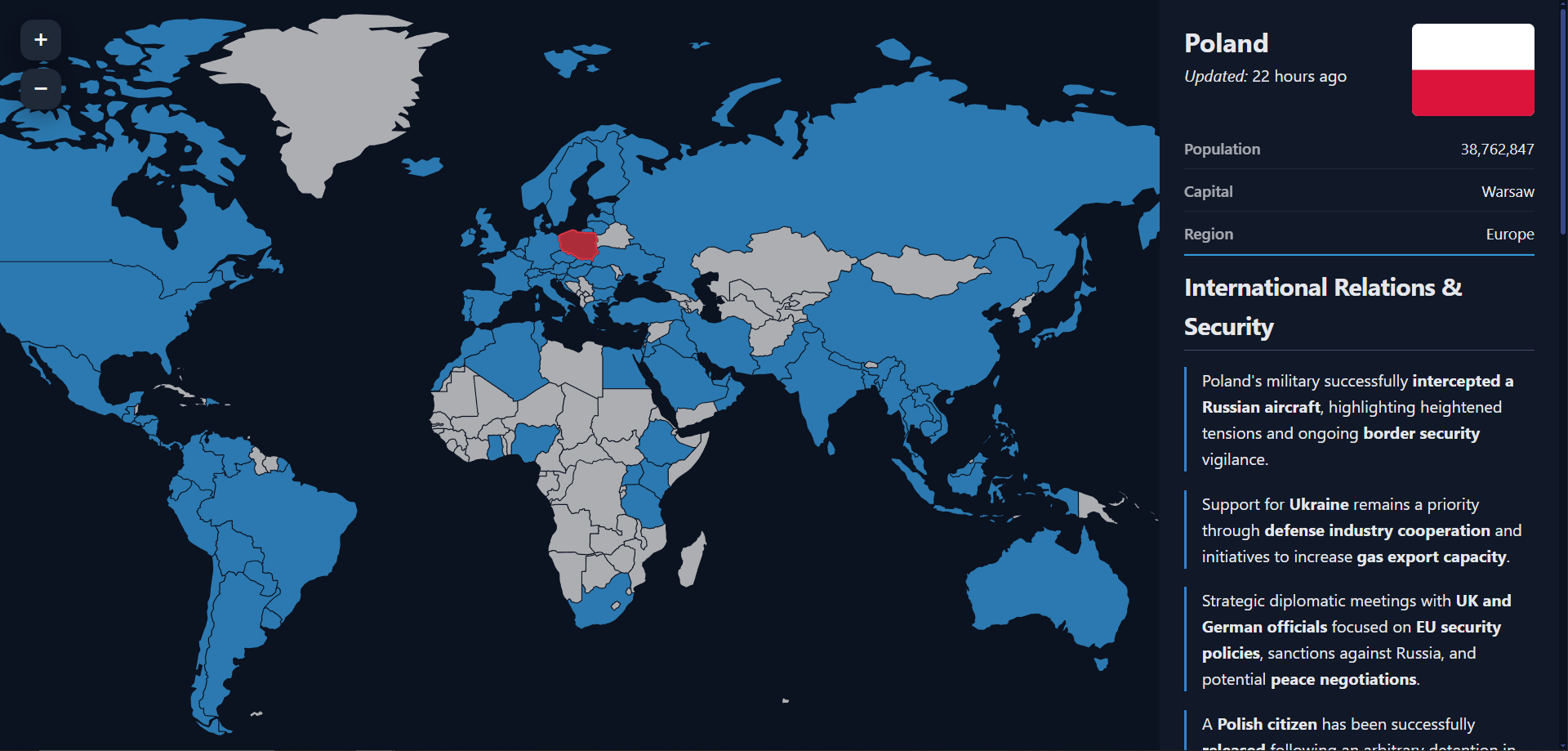
World News Map
Who owns Tagesschau?
Tagesschau is produced by NDR on behalf of ARD, Germany’s association of public broadcasters. It is funded through the Rundfunkbeitrag, a mandatory broadcasting fee paid by German households and businesses. This public-service model is intended to provide financial independence from both private corporate interests and direct state influence.