Is Expreso Politically Biased? Ownership, Funding, and Editorial Policy
Expreso Overview and Political Bias
Expreso is often characterized by critics as a right-wing, conservative outlet with a staunchly anti-communist editorial line. Observers note its frequent use of the term 'caviar' to discredit centrist or left-leaning figures. While supporters view it as a defender of free markets, detractors argue it frequently employs aggressive partisan rhetoric.
| Standpoint | Assessment |
|---|---|
| Overall political leaning | Right |
| Estimated number of readers | 150,000 |
| Israel support | Generally Pro-Israel |
| Use of loaded / emotional language | High |
| Target Audience | Partisan / Conservative Mass Market |
Expreso History
Founded in 1961 by Manuel Mujica Gallo, Expreso was initially recognized for its modern journalistic style. During the 1970s, the newspaper was expropriated by the military government of Juan Velasco Alvarado. Following its return to private ownership in 1980, it transitioned into a more overtly conservative and neoliberal publication.
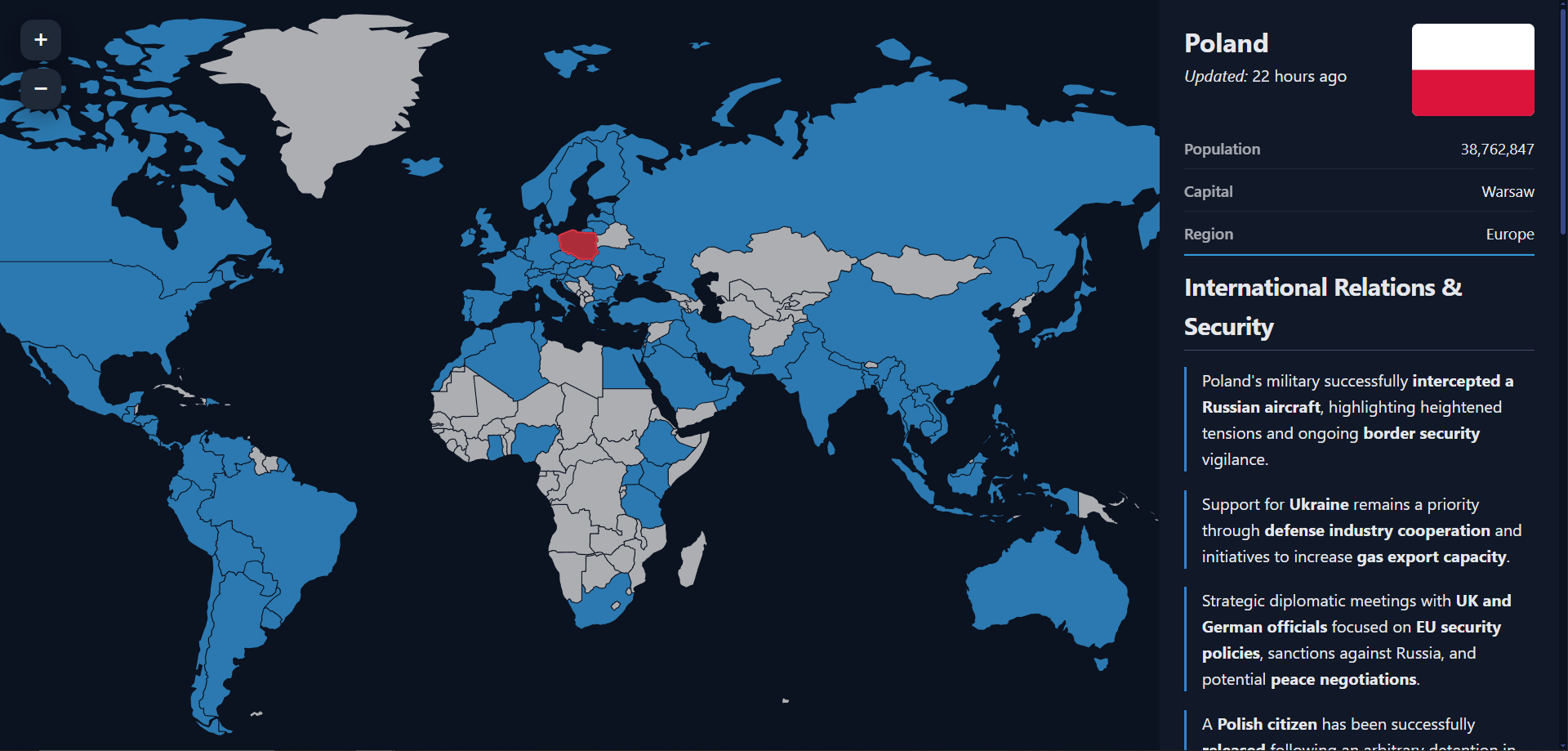
World News Map
Who owns Expreso?
Expreso is owned by Editorial Expreso S.A. The publication has long been associated with the Sarmiento and García Miró families, specifically under the leadership of figures like Luis García Miró Elguera. Funding is primarily derived from commercial advertising and circulation, though critics have historically scrutinized its ties to political interests.